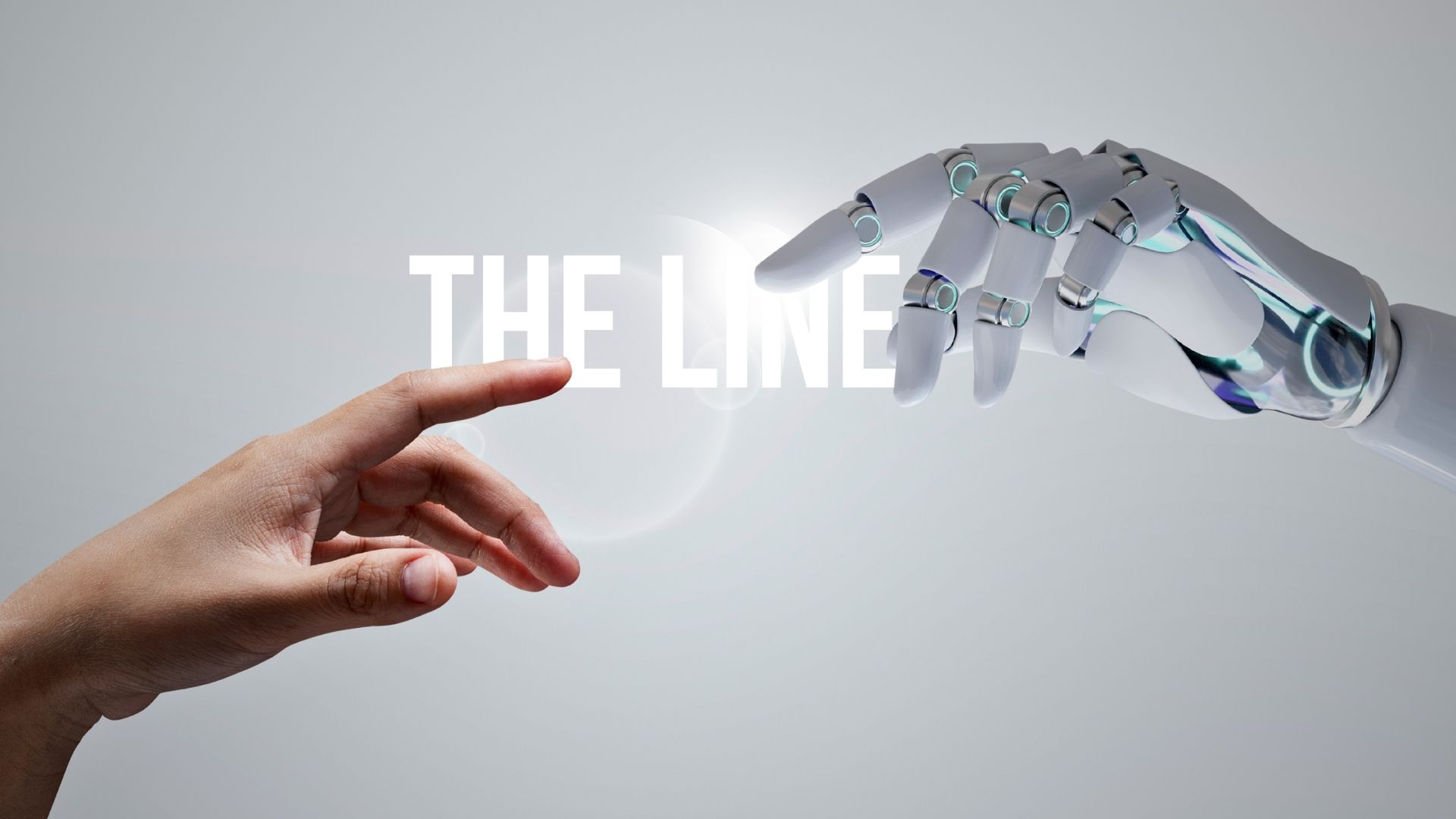

Most businesses exist at one end or the other. They’re either building what exists or imagining what’s next. We live on the line between them.
This isn’t a tagline. It’s a working philosophy.
The line is where ideas meet constraints. Where vision encounters reality. Where what’s possible intersects with what’s practical. It’s the space between “this is how it’s done” and “this is how it could be done.”
It’s also the hardest place to operate – because it requires holding two opposing truths at once: respecting what works while questioning whether it still should.
This is why Selyra exists.
The Problem with Endpoints
Most of the industry operates at extremes.
On one side, you have execution-focused businesses. Agencies that deliver what’s asked for, on time, on budget, without question. They’re efficient. They’re reliable. They optimize existing systems and refine established patterns. There’s value in this – consistency, predictability, scalability.
But there’s also a ceiling. When your entire model is built on doing what’s already been done, you can’t lead. You can only follow faster.
On the other side, you have the visionaries. The experimental studios. The innovation labs that prototype futures and explore emerging technologies. They push boundaries. They challenge conventions. They ask “what if” without worrying about “how.”
This is necessary work. But it’s often disconnected from reality. Beautiful concepts that never ship. Ambitious projects that solve problems nobody has. Innovation for its own sake, divorced from utility.
Both extremes are incomplete.
Execution without vision is stagnation. Vision without execution is fantasy.
The work that matters happens in between.
What the Line Actually Means
The line isn’t compromise. It’s not “a little bit visionary, a little bit practical.” It’s full commitment to both – simultaneously.
It means building systems that work today while designing for how they’ll need to evolve tomorrow. It means using established tools in unconventional ways and experimental technologies in pragmatic applications. It means respecting constraints while actively looking for the ones that no longer serve a purpose.
It requires a specific kind of discipline: the ability to execute flawlessly on the familiar while remaining open to the untested. To deliver what’s expected while proposing what isn’t. To be grounded and ambitious at the same time.
This is harder than it sounds. It requires technical depth and creative flexibility. Strategic thinking and tactical precision. Confidence in what you know and humility about what you don’t.
Most businesses can’t operate this way because they’re optimized for one mode or the other. They’re structured to either deliver efficiently or explore freely – not both.
We’re structured differently.
How This Shows Up in Practice
We don’t take projects at face value. When someone comes to us with a request, we build what they asked for – but we also ask why they’re asking for it. What problem are they actually solving? What assumptions are they operating under? What would change if those assumptions were wrong?
Sometimes the answer is: nothing changes. The request is sound. The approach is right. In those cases, we execute it better than they expected – faster, cleaner, more thoughtfully than they thought possible.
But often, the conversation reveals something deeper. A misalignment between what they think they need and what would actually move them forward. A constraint they’ve accepted that no longer applies. An opportunity they haven’t considered because they’re too close to the problem.
This is where the line matters. We don’t ignore what they asked for and build something else – that’s arrogance. We don’t just do what’s requested without question – that’s abdication. We build what they need, which sometimes looks like what they asked for and sometimes doesn’t.
This requires trust. Clients have to believe we understand their goals better than we understand our own preferences. That we’re not experimenting on their budget or pushing technology for its own sake. That every decision – conventional or unconventional – is in service of outcomes, not aesthetics.
We earn that trust by being right more often than we’re not. And when we’re not, by adjusting quickly.
Why Most Agencies Can’t Do This
The traditional agency model is built on specialization and repeatability. You hire specialists who do one thing exceptionally well. You develop processes that make that thing scalable. You build systems that let you deliver predictably across dozens or hundreds of clients.
This works – until it doesn’t.
Specialization creates silos. The brand team doesn’t talk to the dev team. The strategists don’t understand the technical constraints. The designers propose things that can’t be built, and the developers build things that don’t serve the strategy.
Repeatability creates templates. You start using the same solutions for different problems because they’re proven and efficient. You stop asking whether there’s a better way because the current way works well enough.
Scale creates distance. The people making decisions aren’t the people doing the work. The people doing the work don’t have context about why. Everyone’s optimizing for their own part of the process, and no one’s responsible for the whole.
We’re small enough that this doesn’t happen. The person you’re talking to is the person thinking through your problem. The person thinking through your problem is connected to the person building the solution. There are no layers of abstraction between intent and execution.
This doesn’t scale the way agencies scale. But it produces work that couldn’t happen any other way.
What We Actually Believe
Technology is not neutral. Every tool encodes assumptions about how the world works and how it should work. Choosing a technology is choosing a set of constraints and possibilities. We take that seriously.
Aesthetics are not superficial. How something looks is part of how it functions. Design isn’t decoration – it’s communication, structure, and intention made visible. We don’t separate form from function because they’re not separate.
Strategy is not static. The best plan today might be the wrong plan tomorrow. Markets shift. Technologies evolve. Audiences change. We build systems that can adapt, not just execute a fixed vision.
Experimentation is not optional. If you’re not testing new approaches, you’re falling behind. But experiments have to be deliberate, bounded, and connected to real goals. We explore, but we don’t wander.
Clients are not orders. They’re partners. The best work happens when both sides are thinking, challenging, refining. We push back when we disagree. We defer when they know better. We collaborate when neither of us is sure.
What This Means for You
If you’re looking for someone to execute a clear brief efficiently and affordably, we’re probably not the right fit. There are excellent agencies built for that, and they’ll serve you well.
If you’re looking for a partner to imagine the future without worrying about how to get there, we’re not that either. We respect vision, but we’re not in the business of producing beautiful ideas that never ship.
But if you’re trying to solve a problem that doesn’t have an obvious answer – if you need something built that works today but positions you for tomorrow – if you’re willing to collaborate rather than delegate – then we should talk.
We work with people who know what they want to achieve but aren’t sure how to get there. Who are open to unconventional approaches but need confidence that they’ll actually work. Who value craft, strategy, and creativity in equal measure.
We work with people who exist on the line, too.
Why We’re Honest About AI
Since we’re here, let’s address it directly: AI is changing everything, and most of what you’re hearing about it is either hype or fear. Both are unhelpful.
AI is not going to replace human creativity, judgment, or strategy. It’s also not a magic solution that solves every problem. It’s a tool – powerful, versatile, and evolving – but still a tool.
We use AI. A lot. For generating options, exploring directions, automating repetitive work, analyzing patterns, prototyping quickly. It makes us faster and lets us test more ideas in less time.
But we don’t use AI as a shortcut around thinking. Every output gets evaluated, refined, and often rejected. The judgment about what’s worth keeping is human. The strategy behind what we build is human. The taste that determines whether something is good or just competent is human.
AI amplifies capability. It doesn’t replace it.
If you work with us, we’ll be transparent about where AI is involved and where it isn’t. We’ll use it when it makes the work better and avoid it when it doesn’t. We won’t hide behind it or oversell it.
This honesty is unusual right now. Most agencies are either pretending AI doesn’t exist or claiming it makes them 10x faster and cheaper. Neither is true, and both are disrespectful to clients who deserve to understand what they’re paying for.
We’d rather lose a project by being honest than win one by overpromising.
What Comes Next
We don’t know what the next five years look like. No one does. The technologies that matter in 2030 might not exist yet. The platforms people use might be completely different. The skills that are valuable today might be commoditized tomorrow.
But we know this: the businesses that thrive won’t be the ones executing the same playbook faster. They’ll be the ones willing to operate in uncertainty – building with one foot in the present and one in the future, making decisions without complete information, and adapting as the landscape shifts.
That’s the line.
It’s uncomfortable. It’s unstable. It requires constant recalibration.
It’s also the only place where meaningful work happens.
This is where we build. If that’s where you need to be, we should talk.